

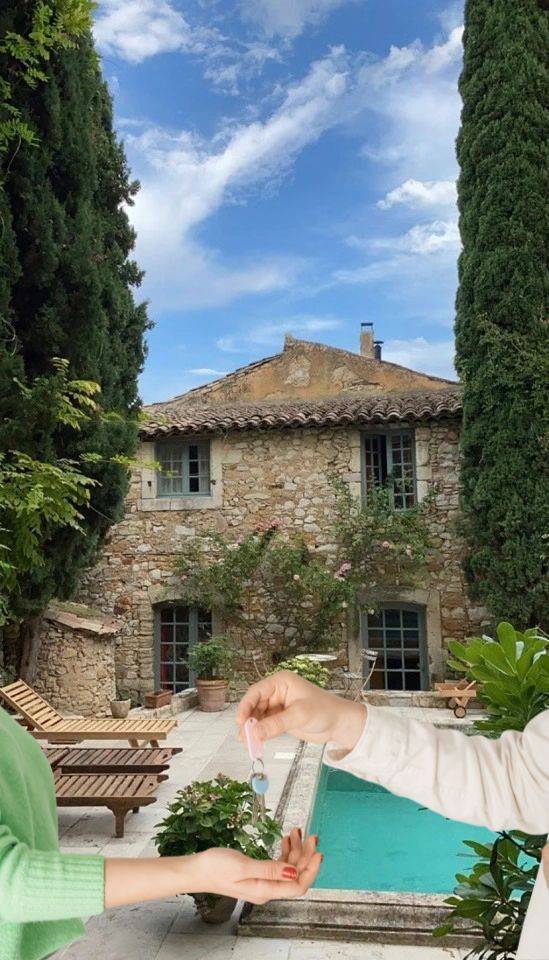
A buyer doesn’t view a house: they try on a life. Within minutes, they wonder whether they can see themselves having coffee on the terrace, entertaining friends in summer, reading by the fire in winter. Their decision often comes down to details the seller no longer notices. Selling well means helping them picture themselves there.
From “my house” to “your future home”
This is the hardest step, and yet the most important. As long as you see your house as “home”, every remark from a visitor can hurt, and every negotiation can feel unfair. The day you decide to sell, your house becomes someone else’s future home.
This change of perspective doesn’t erase your memories. It simply helps you stay calm during viewings, listen to comments without taking them personally, and make better decisions when an offer comes in.
The first thirty seconds: arriving
Long before they step through the door, buyers have already formed a first impression. In the Luberon, many houses are discovered at the end of a track, behind a gate or around the bend of a drive. That moment matters enormously.
- The access road: is it easy to find? Clear directions stop buyers from arriving late and frustrated.
- Where to park: keep a clear space so the viewing can start without awkward manoeuvring.
- The first glance: gate open, entrance clear, letterbox tidy. These are details, but they set the tone for the whole viewing.
A viewing experienced with all five senses
We think we view a house with our eyes. In reality, we feel it with our whole body.
- Light: open all the shutters and windows. Schedule viewings for when your house looks its best: in the morning if it faces east, late in the day if the terrace catches the sunset.
- Smells: air the house well before every viewing. Avoid strong room fragrances, which suggest something is being hidden. A house that simply smells clean, or of wood and lavender, is reassuring.
- Sounds: a trickling fountain, birdsong, the silence of the countryside are real assets. Turn off the television and radio so they can be heard.
- Temperature: in summer, the coolness of a stone house’s thick walls is a wonderful selling point. In winter, a fire in the fireplace completely changes the atmosphere.
- Touch: a handle that feels solid, a door that closes without forcing, a tap that doesn’t drip. These small things give the impression of a well-maintained house.
Tell your house’s story
In the Luberon, many houses have a story: an old farmhouse, a magnanerie where silkworms were raised, a converted sheepfold, an olive tree planted by a grandfather. You are the only one who knows this story, and it can tip a decision.
Write down what you know: the age of the house, its former uses, the main stages of its renovation, the anecdotes that make it unique. Only tell what is true, but do tell it. A buyer doesn’t just buy square metres: they buy a story they will carry on.
“You never just buy a house: you buy the life you imagine living there.”
Prepare a house booklet
Here is a simple idea that very few sellers think of: put together a small booklet describing everyday life in your house. It is not an official document, it is a gift for the buyer, and a very strong selling point.
- The house through the seasons: the coolest room in August, where the sun sets in summer, the ideal terrace for lunch in winter.
- Practical life: the average water and energy bills, pool maintenance, bin collection day. If you have carried out insulation or heating work, mention it: the France Rénov’ website (in French) explains how such work improves a home’s energy performance.
- Your trusted contacts: the plumber, electrician, gardener or pool specialist you rely on.
- The surroundings: the bakery, market day, the school, and your favourite walks around the house, as far as the Colorado provençal (page in French) or the hilltop villages of the Luberon.
For a buyer who doesn’t yet know the region, especially one coming from abroad, this booklet is extremely reassuring. It shows a house that is loved and well known by its owners.
Let the buyer picture themselves there
- Keep a low profile during viewings: ideally, don’t be there at all, or stay out of the way. Buyers won’t open a cupboard or criticise a room in front of the owner.
- Give them time: a buyer who lingers alone on the terrace is a buyer imagining their life there. Don’t rush them.
- Agree to a second viewing: at a different time of day, with someone close to them, or to take measurements. It is often a sign of genuine interest.
- Put away anything too personal: a few family photos are fine, but a house full of personal belongings stops buyers from imagining their own things there.
Transparency, your best ally
Every house has flaws, especially old ones. A wall that shows damp in winter, a window that lets the mistral in, a track that washes out after a storm. It is tempting to say nothing. But that is a mistake.
A flaw mentioned from the start is reassuring: it shows you are honest, and the buyer can calmly factor it into their plans. A flaw discovered later, on the other hand, casts doubt on everything else, and can lead to renegotiation or even the buyer pulling out. Keeping quiet about a flaw you know of can also come back to haunt the seller after the sale. Talk about it openly with your agent and your notary (website in French): they will help you present things clearly.
Responding well to an offer
- Don’t reject a serious offer too quickly: even if it is a little below your expectations, it is often the start of a conversation. Take time to consider it.
- Look beyond the price: the strength of the financing, the preferred completion date and the conditions requested matter as much as the amount. A slightly lower but solid offer is sometimes better than a higher but fragile one.
- Understand what the buyer is looking for: some want to move in quickly, others need time. Knowing what matters to them helps you reach an agreement that works for everyone.
- Stay calm: a negotiation is never a personal attack. Your agent is there to handle it with you, and sometimes on your behalf.
Think about buyers from abroad
In the Luberon, a large share of buyers come from abroad: the Netherlands, Belgium, Germany, the United Kingdom, Switzerland and many other countries. For them, buying in France is an adventure, with rules they don’t always know. A few thoughtful touches make all the difference:
- a summary of the key information about the house, translated into English;
- patience in explaining the French steps: the compromis de vente (preliminary sale agreement), the buyer’s cooling-off period, the role of the notary. ANIL (in French) explains these steps free of charge;
- flexibility for viewings, which are sometimes arranged during a short stay in the region.
Plan your own move
It is often overlooked: a seller who knows where they are going is a calmer seller. If your next step is already planned, you can be more flexible on the completion date, and that flexibility is a real advantage for the buyer. Conversely, a seller under time pressure always negotiates less well.
Handover day
The sale ends at the notary’s office, but the memory the buyer keeps of you begins the day they walk into their new home. Leave the house clean, the keys clearly labelled, the house booklet on the table, and why not a small gift: a bottle of Luberon wine or olive oil from the local mill. It is a simple gesture that marks the end of your story with the house and the beginning of theirs.
Frequently asked questions
How can I sell my house quickly and well?
By presenting it the way a buyer would like to discover it: a well-kept arrival, a bright and airy house, a story to tell, practical information prepared in advance and full transparency about any flaws.
Should I be present during viewings of my house?
It is better to keep a low profile, or even be absent. The buyer feels freer to look around, ask questions and picture themselves there, and your agent can answer their questions.
Should I tell the buyer about my house’s flaws?
Yes. A flaw mentioned from the start reassures the buyer and avoids unpleasant surprises. Hiding a known flaw can lead to renegotiation, the sale falling through, or even problems after signing.
How should I respond to an offer below the asking price?
Take time to consider it, looking also at the strength of the financing and the conditions proposed. A serious offer is often the starting point of a discussion, which your agent can handle with you.
Sell your home well with Les Clés du Luberon
Les Clés du Luberon support owners at every stage of their sale, from the first viewing to the handover of the keys. We help you see your house through a buyer’s eyes, tell its story and find the person who will bring it to life. Our agency in Fontaine-de-Vaucluse looks forward to welcoming you.