
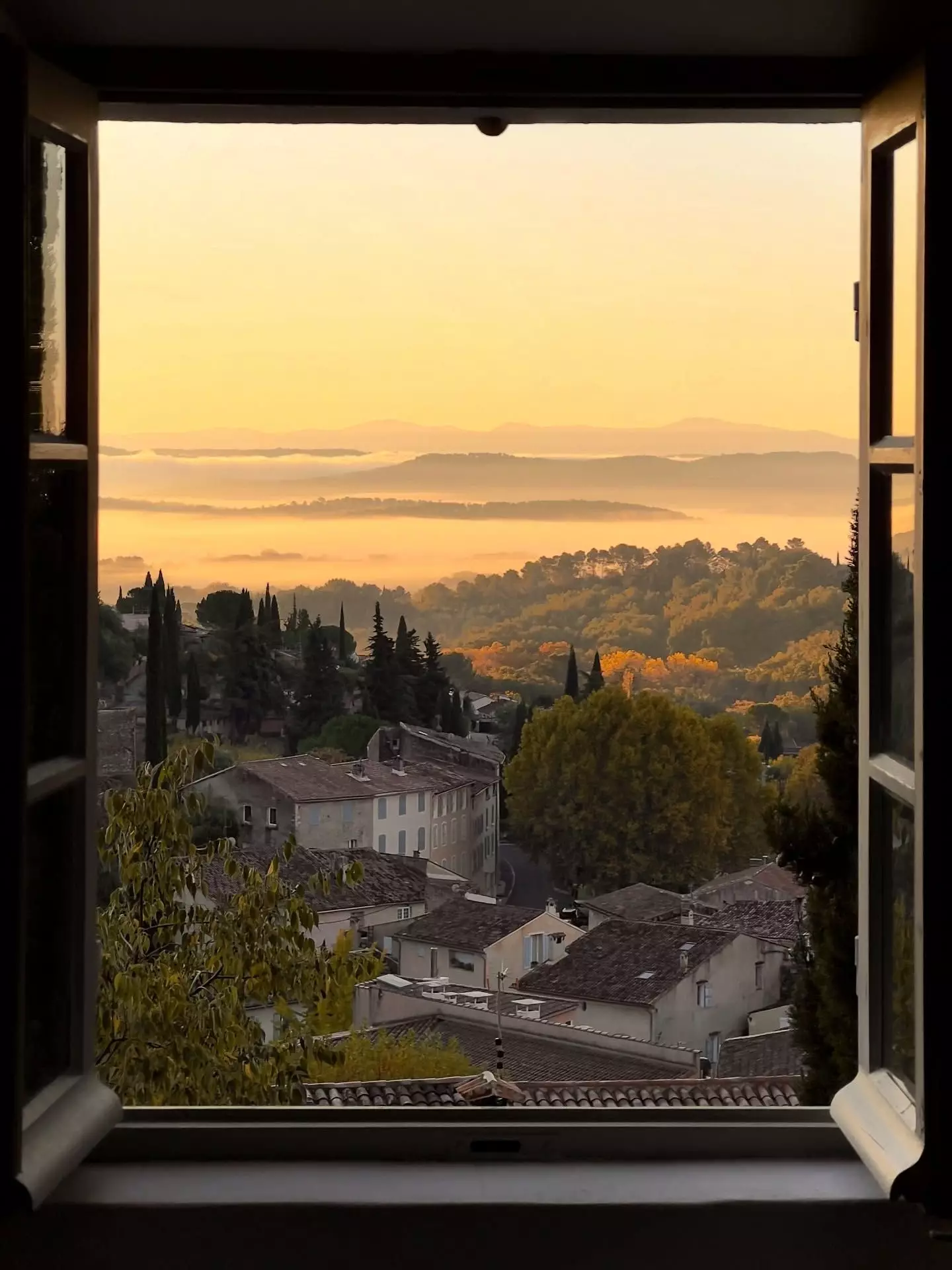
In the Luberon, many houses are passed down from generation to generation: a mas bought by grandparents, a village house where every holiday was spent, a bastide restored over many years. When the time comes to deal with the estate, the questions pile up. Here are the answers to the most common ones.
Every estate is unique. The answers below set out the main principles of French law: for your specific situation, only a meeting with a notary (website in French) can give you tailored advice.
“Where do you start when you inherit a house?”
The notary’s view: as soon as an estate includes a house or land, a notary must be involved. The heirs are free to choose one. The notary identifies the heirs, checks whether there is a will or a gift, draws up an inventory of the assets and prepares the deeds that transfer ownership of the house.
Thomas’s view: “You don’t need to wait until you’ve made a decision about the house. You can start the process with the notary and, at the same time, take time to think about what you want to do with it.”
“Are there deadlines to meet?”
The notary’s view: the inheritance tax return must in principle be filed within six months of the death if it occurred in France, and within twelve months if it occurred abroad. After that, late-payment interest may apply. It is therefore best to make an appointment quickly. The Service-Public.fr website (in French) details the steps to take after a death.
“Do you have to accept the inheritance?”
The notary’s view: no, never. An heir can choose between three options: accept the estate, accept it only up to the value of what it contains, so as not to have to pay debts beyond that, or renounce it. This choice is important, especially when the deceased had debts, and the notary helps each heir make their decision.
“Who inherits the house?”
The notary’s view: in France, the law protects certain heirs. Children are entitled to a minimum share of the estate, the réserve héréditaire, a form of forced heirship, which cannot be taken away from them, even by will. The surviving spouse also has significant rights, which depend on the family situation and on choices made by the deceased during their lifetime. When there are several heirs, the house usually belongs to all of them jointly: this is known as indivision, or joint ownership (page in French).
“How does it work when the house belongs to several heirs?”
The notary’s view: in joint ownership, each heir owns a share of the house, but no room in particular. The heirs therefore have to agree on how to manage it, maintain it, pay the costs or decide to sell. The law sets out an important principle: no one can be forced to remain in joint ownership. An heir can ask to leave it, for example by selling their share to the others. Selling the house normally requires everyone’s agreement, but there are also procedures for when a majority of heirs wish to sell.
Thomas’s view: “What I see on the ground is that the families who manage best are the ones who talk early. A family home carries a lot of emotion. Taking the time to discuss it together, without rushing, avoids a great deal of tension.”
“A family home is passed on with its walls, but above all with its memories. Taking the time to talk about it together is already a way of protecting it.” Thomas
“How much is inheritance tax?”
The notary’s view: it all depends on the family relationship with the deceased. A married spouse and a PACS partner (French civil partnership) are exempt from inheritance tax. Children benefit from a substantial allowance for each parent, then pay tax on a progressive scale on anything above it. Brothers and sisters, nephews and nieces and other heirs have lower allowances and are taxed more heavily. The amounts are set by law and change over time: you can check them on impots.gouv.fr (in French), and the notary calculates exactly what each heir has to pay.
“Why does the house need to be valued?”
The notary’s view: in the inheritance tax return, the house must be declared at its real value on the day of death, in other words the price at which it could be sold. A value that is too low can be challenged by the tax authorities, especially if the house is resold shortly afterwards at a higher price. This value is also used as the basis for calculating any capital gain on a future sale.
Thomas’s view: “That’s where we come in. In the Luberon, every house is unique, and prices vary a lot from one village to the next, sometimes from one lane to the next. A fair, well-argued valuation, based on real knowledge of the local market, reassures both the notary and the heirs. And it avoids unpleasant surprises later on.”
“Should you keep, rent out or sell the house?”
Thomas’s view: “There’s no universal right answer. I often advise families to ask themselves very practical questions. Who will really use the house, and for how many weeks a year? Who will look after the garden, the pool, the mandatory brush clearance in wooded areas? Are the running costs and the property tax (taxe foncière) affordable for everyone?”
“Renting it out can be a way to cover costs and keep the house in the family, but it requires real management, and local rules on holiday lets must be respected. And sometimes, selling is the most peaceful solution, especially when the heirs live far away or don’t share the same plans. In that case, a family home deserves a carefully prepared sale.”
The brush clearance rules in the Vaucluse are set out by the Vaucluse prefecture (in French).
“What should you do with the house while the estate is being settled?”
Thomas’s view: “People often forget, but an empty house needs attention. It must stay insured, maintained, aired and watched over, especially in winter and during the wildfire season. A house that is well looked after during the estate process is also a house that keeps all its value, whatever the final decision.”
“Can you sell an inherited house straight away?”
The notary’s view: ownership must first be officially transferred to the heirs, by a deed drawn up by the notary. After that, the sale proceeds like any standard sale, with the agreement of the heirs concerned. If the house was not the heirs’ main residence, a capital gain may be taxed: it is calculated from the value declared in the estate, with allowances depending on how long it has been owned.
“And when the heirs live abroad?”
The notary’s view: this is very common in the Luberon, where many houses belong to foreign families. Several countries may then be involved: the law that applies to the estate, taxes in France and in the country of residence, and any treaties between the two countries. Within the European Union, common rules determine which law applies: the European e-Justice Portal explains them in every EU language. These cases need specialist support, and it is best to start early.
“Can you plan the transfer during your lifetime?”
The notary’s view: yes, and it is often the best way to protect your family. A gift to your children, a gradual transfer of the house, the choice of ownership structure, a will: there are many solutions, which the notary studies with each family.
Thomas’s view: “Planning ahead also means knowing what your house is worth today. Many owners ask us for a valuation simply to prepare that conversation with their children and their notary.”
Les Clés du Luberon, by your side with care
Les Clés du Luberon support families who inherit a house in the Luberon, with attentiveness and discretion. We provide realistic, well-argued valuations, useful for the notary and the heirs alike, and, if you wish, we help you sell the family home in the best possible conditions. Thomas and the whole team welcome you at our agency in Fontaine-de-Vaucluse to talk it over, at your own pace.